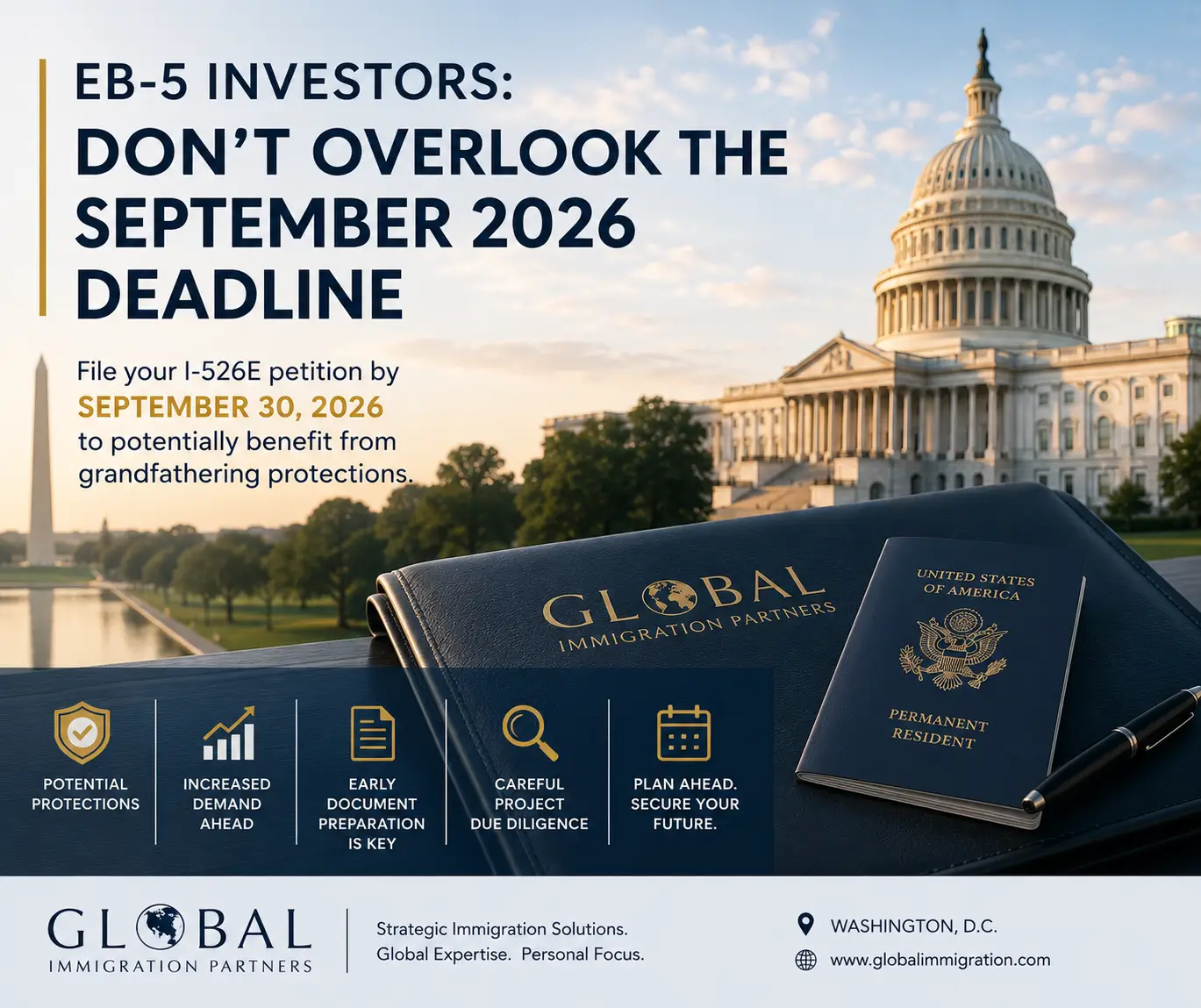
Are you considering applying for an EB5 green card in the US? This article will guide you through the application process and provide information on the requirements for obtaining an EB5 visa.
What Is the EB-5 Immigrant Investor Program?
The EB-5 Immigrant Investor Program was congress created to encourage economic growth, employment creation, and capital investment in the United States. Administered by the U.S. government and overseen by the Department of Homeland Security, the program allows eligible immigrant entrepreneurs and investors to pursue permanent residency through qualifying investments.
Today, investors may choose between a direct investment model or participation through the Regional Center Program. More than 90% of EB-5 investors select Regional Centers because they can count indirect jobs toward job creation requirements, making compliance easier than many direct investment projects.
Under the Reform and Integrity Act and Integrity Act provisions governing the EB-5 visa program, investors must demonstrate that their investment funds are lawfully sourced and that the qualifying investment will support employment creation in the United States.
EB-5 Investment Requirements
The minimum investment depends on where the project is located.
| Investment Type | Minimum Investment Amount |
|---|---|
| Targeted Employment Areas (TEAs), rural area projects, and certain infrastructure projects | $800,000 |
| Projects outside Targeted Employment Areas | $1,050,000 |
Targeted Employment Areas include qualifying rural area locations and high unemployment areas identified under federal regulations. Many investors favor these projects because they require a lower investment amount and may offer certain visa allocation advantages.
The investment required must be placed at risk for the purpose of generating a return and promoting economic growth. Acceptable investment capital may include cash, cash equivalents, business assets, or other qualifying sources, provided the investor can document the lawful source of funds.
Step-by-Step EB5 Process from Investment to Green Card
Step 1: Choose an EB5 Regional Center
An EB5 regional center is a designated organization that sponsors EB5 projects and facilitates the investment process. These centers are approved by the US Citizenship and Immigration Services (USCIS) and can be found in various states across the US.
When choosing an EB5 regional center, it is important to research their track record, investment opportunities, and success rates. You should also consider the location of the regional center and the type of project they are offering.
We can Help: EB5 Regional Center
Step 2: Make the Investment
Once you have chosen an EB5 regional center, you will need to make the required investment of $800,000. This investment can be made in the form of cash, equipment, inventory, or other tangible assets.
It is important to note that the investment must be made in a new commercial enterprise, which is defined as a for-profit business that was established after November 29, 1990. The investment must also create at least 10 full-time jobs for US workers.
Step 3: File Form I-526
After making the investment, you will need to file Form I-526, also known as the Immigrant Petition by Alien Entrepreneur. This form is used to demonstrate that you meet the requirements for an EB5 visa, including the source of your investment funds and the job creation potential of your investment.
Step 4: Conditional Green Card
If your Form I-526 is approved, you will be granted a conditional green card, which is valid for two years. During this time, you will need to maintain your investment and provide evidence that the required jobs have been created.
Step 5: File Form I-829
Within 90 days of the expiration of your conditional green card, you will need to file Form I-829, also known as the Petition by Entrepreneur to Remove Conditions. This form is used to demonstrate that you have met the requirements of the EB5 visa program and should be granted a permanent green card.
Step 6: Permanent Green Card
If your Form I-829 is approved, you will be granted a permanent green card, which is valid for 10 years. After five years of holding a green card, you may be eligible to apply for US citizenship.
I-526E, DS-260/I-485 and I-829 Explained
Several forms play a critical role during the EB-5 process.
Form I-526E
Form I-526E serves as the immigrant petition for investors participating in the Regional Center Program. It demonstrates the qualifying investment, source of funds, and compliance with EB-5 requirements.
Form DS-260
Applicants outside the United States complete Form DS-260 as part of immigrant visa processing through a U.S. consulate. This stage includes civil documents, medical examination requirements, and an immigrant visa interview.
Form I-485
Investors already present in the United States may file Form I-485 to adjust status. Certain applicants may also qualify for concurrent filing, which can provide work authorization and travel benefits while the case is pending.
Form I-829
Form I-829 removes the conditions attached to the Green Card. Approval confirms that the investment remained compliant and that employment creation requirements were satisfied. Successful approval results in permanent Green Cards for investors and family members.
Benefits of an EB-5 Green Card
Obtaining permanent resident status through the EB-5 immigrant investor program offers several long-term advantages.
Green Card holders can live, work, and retire anywhere in the United States without employer sponsorship requirements. Investors may establish businesses, pursue employment opportunities, or relocate freely between states.
Family members included in the application may also benefit. Children can attend U.S. public schools and universities, and many families later qualify for in-state tuition rates that are significantly lower than international student rates.
EB-5 visa holders also enjoy enhanced global mobility. While a Green Card itself is not a passport, lawful permanent residents often receive visa-free or simplified travel access to numerous countries compared to citizens of some other countries. The program additionally provides a pathway to permanent residence and eventual U.S. citizenship for eligible applicants.
Document Checklist
Common EB-5 documents include:
- Passport and identification documents
- Birth certificates
- Marriage certificates
- Civil documents for family members
- Evidence of investment funds
- Source of funds documentation
- Tax returns
- Bank statements
- Business ownership records
- Property sale documents
- Gift documentation (if applicable)
- Investment subscription agreements
- Regional Center project documents
- Employment records
- Financial statements
USCIS may request additional evidence depending on the complexity of the investment process and source of funds review.
Timeline by Stage
| Stage | Estimated Timeline |
| Investment selection and due diligence | 1–3 months |
| Filing I-526E petition | Initial filing |
| I-526E adjudication | Varies significantly |
| DS-260 or I-485 stage | Several months |
| Conditional Green Card issuance | After approval |
| Conditional residency period | 2 years |
| I-829 filing and review | Varies |
| Permanent Green Card approval | Following I-829 approval |
Priority date movement may affect overall timelines, particularly for investors from countries with higher demand.
Costs Beyond the Investment Amount
Many applicants focus solely on the minimum investment amount, but additional costs should also be considered.
Investors should budget carefully to account for these expenses throughout the entire process. Potential expenses include:
- USCIS filing fees
- Consular processing fees
- National Visa Center fees
- Immigration attorney fees
- Regional Center administrative fees
- Translation services
- Medical examination costs
- Due diligence expenses
- Source of funds preparation costs
- Travel expenses for consular interviews
Common Reasons for Delay
One of the most common causes involves incomplete source of funds documentation. USCIS carefully reviews the origin of investment funds and may issue requests for additional evidence if documentation is unclear.
Project-related issues can also affect timelines. Delays in construction, infrastructure projects, or business operations may impact employment creation requirements.
Investors may also experience delays due to priority date retrogression, visa availability limitations, incomplete petitions filed, security checks, or insufficient documentation related to job creation.
Working with experienced immigration counsel and conducting thorough project due diligence can help reduce avoidable delays.
Regional Center vs Direct Investment
| Factor | Regional Center Program | Direct Investment |
| Most common option | Yes | No |
| Indirect jobs count | Yes | No |
| Investor involvement | Typically passive investment | More active involvement |
| Job creation calculation | More flexible | Direct employees only |
| Administrative burden | Generally lower | Generally higher |
Many investors prefer the Regional Center Program because indirect jobs can satisfy job creation requirements, reducing the operational burden on the immigrant investor.
Why Legal Guidance Can Be Valuable
The EB-5 process involves immigration law, securities considerations, source of funds analysis, and extensive documentation requirements. Investors often work with immigration counsel to evaluate project suitability, prepare petitions, manage concurrent filing opportunities, and address requests for evidence.
Professional guidance from our team at Global Immigration can also help investors understand visa availability issues, priority date implications, and compliance obligations throughout the process.
Conclusion
Obtaining an EB5 green card in the US can be a complex process, but it can also provide a path to permanent residency for foreign investors. By understanding the requirements and following the application process, you can increase your chances of success in obtaining an EB5 visa.
If you are considering applying for an EB5 green card, be sure to research and choose a reputable EB5 regional center and consult with Global Immigration Partners PLLC Law Firm for guidance throughout the process. With patience and diligence, you can achieve your goal of obtaining an EB5 visa and becoming a permanent resident of the United States.
Frequently Asked Questions
What is the minimum investment required for an EB-5 Green Card?
The current minimum investment is $800,000 for qualifying projects located in Targeted Employment Areas, including many rural area and high unemployment areas. Investments outside TEAs generally require $1,050,000.
Can I invest through a Regional Center?
Yes. More than 90% of EB-5 investors choose Regional Center investments because the Regional Center Program allows indirect jobs to count toward employment creation requirements.
Can my family receive Green Cards through my EB-5 application?
Yes. Eligible family members typically include a spouse and unmarried children under 21. Successful applicants receive conditional residency together.
What happens after the two-year conditional residency period?
Investors must file Form I-829 to remove conditions. Approval results in lawful permanent resident status without conditions and a path toward U.S. citizenship.
Can I live anywhere in the United States after obtaining an EB-5 Green Card?
Green Card holders may live, work, study, or retire anywhere in the United States and are not tied to a specific employer or location.
What is the difference between a direct investment and a Regional Center investment?
Direct investment generally requires direct job creation by the business itself, while Regional Center investments may count indirect jobs, making compliance with job creation requirements easier for many investors.
Can I file for adjustment of status while my EB-5 case is pending?
Certain applicants physically present in the United States may qualify for concurrent filing and adjustment of status, depending on eligibility and visa availability.
How long does the EB-5 Green Card process take?
Timelines vary based on project type, country of birth, priority date movement, visa availability, and USCIS processing times. Many cases take several years from initial investment to permanent Green Card approval.
Read more about EB5 Visa Lawyer
Read more about Gold Card Visa
Read more about What is EB5 Visa?
Read more about EB5 Visa Attorney
Read more about EB-5 Visa Requirements
Read more about EB-5 Visa Process
Read more about EB-5 Visa Timeline
Read more about EB5 Regional Centers
Read more about What is an EB-5 Regional Center
Read more about EB-5 Visa Top Benefits for Investors
Read more about EB-5 Visa Category
Read more about EB5 Visa Costs
Read more about EB5 Visa UK
Read more about EB5 Visa India
Read more about EB5 Visa Mexico
Read more about EB5 Visa Canada
HOW WE HELP CLIENTS

Global Immigration Partners PLLC, is a specialized immigration law firm.
1717 Pennsylvania Avenue NW, Washington DC, 20006, United States
Phone: +1 267-507-6078