A U.S. green card gives a lawful permanent resident the right to live permanently in the United States and work lawfully, subject to immigration law. Eligibility may arise through family, employment, investment, humanitarian or other categories. A green card is not citizenship, and naturalization requires a separate application and eligibility review.
Who Qualifies?
A person must qualify under a specific immigrant category; having a relative, job or investment does not by itself establish eligibility. Common routes include:
- Family-based categories for qualifying relationships with U.S. citizens or lawful permanent residents
- Employment-based categories for qualifying workers, professionals, executives, people with extraordinary ability and certain other applicants
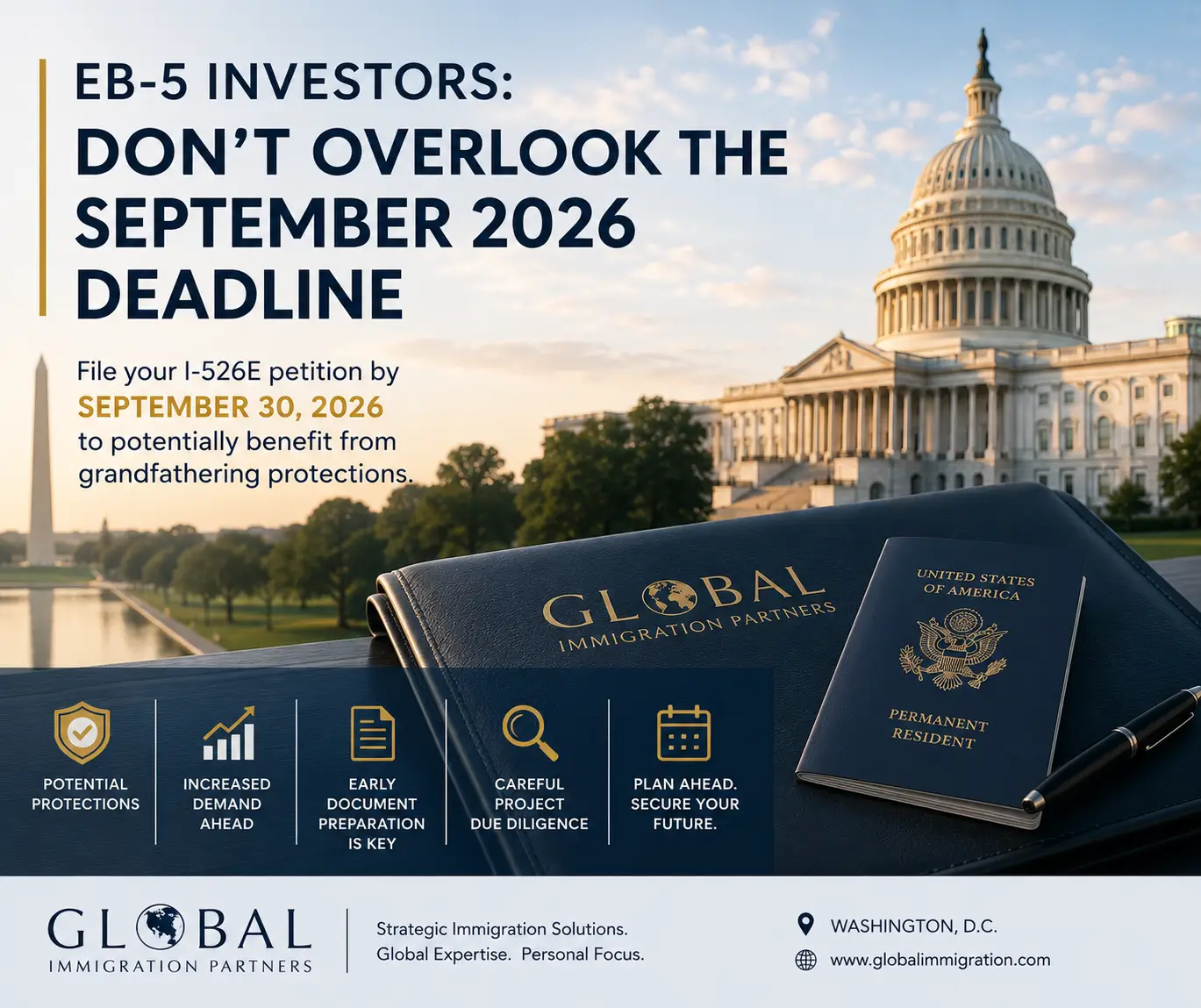
- EB-5 for qualifying investors who meet the investment and job-creation requirements
- Humanitarian routes for qualifying refugees, asylees and certain other protected groups
- Diversity Visa and other special categories when the statutory requirements are met
Each route has its own petition, evidence, visa-availability and admissibility rules. The applicant should identify the exact category before choosing an application process.
Conditional and 10-Year Green Cards
Some people receive two-year conditional permanent residence, including qualifying marriage-based applicants whose marriage is less than two years old when permanent residence begins and EB-5 investors. They must use the applicable process to request removal of conditions. Other permanent residents generally receive a card valid for 10 years. Expiration of the physical 10-year card is different from expiration of the underlying permanent resident status, although valid evidence of status must still be maintained.
Benefits of a Green Card
Lawful permanent residence provides important rights, but each benefit has limits. The green card is evidence of permanent resident status; it is not U.S. citizenship.
| Area | What permanent residence generally provides | Important limit |
| Residence | The right to live permanently in the United States while maintaining status | Status may be abandoned, rescinded or lost under immigration law |
| Employment | Authorization to work in the United States without a separate EAD for most jobs | Some positions are restricted to U.S. citizens or require separate security eligibility |
| Travel | The ability to travel and seek readmission as a permanent resident | Long absences and other facts can raise abandonment or admissibility issues |
| Family sponsorship | The ability to petition for certain qualifying relatives | Eligible relationships, preference categories and waiting periods vary |
| Public programs and education | Eligibility for some programs or resident tuition may be available when separate rules are met | Green-card status alone does not guarantee a benefit or tuition classification |
| Naturalization | The ability to apply if the person later meets the applicable naturalization requirements | Citizenship is a separate application and is never automatic |
When Can a Green Card Holder Apply for U.S. Citizenship?
Many permanent residents use the general five-year naturalization rule. Certain applicants who have been permanent residents for at least three years and have lived in marital union with a U.S. citizen spouse may qualify under the three-year rule. The applicant must also meet the other applicable requirements, including continuous residence, physical presence, good moral character, English and civics requirements unless an exception applies, and the oath process. Reaching three or five years does not guarantee approval.
Responsibilities and Maintaining Permanent Residence
A permanent resident must comply with U.S. federal, state and local laws, file required tax returns and report income, and update USCIS after a change of address when required. Selective Service registration may apply to certain men between ages 18 and 25. A permanent resident age 18 or older must carry proof of permanent resident status as required. Permanent residents should also consider immigration consequences before extended travel, claiming nonresident tax treatment or taking other action that could suggest abandonment of U.S. residence.
How to Apply
The process depends on the category and whether the applicant applies inside or outside the United States:
- Identify the exact green-card category, qualifying relationship or employment basis, and any petitioner or self-petition rule.
- File the required immigrant petition when the category requires one, with evidence supporting the specific classification.
- Confirm visa availability when the category is subject to numerical limits; the Visa Bulletin may affect when the next step can be filed.
- When eligible, apply through adjustment of status with USCIS if the applicant qualifies in the United States, or complete immigrant-visa processing through the Department of State abroad.
- Submit the required evidence and complete any applicable biometrics, medical-examination and interview steps, then follow any post-approval or condition-removal requirements that apply to the category.
At Global Immigration Partners, we guide clients through every stage—from petition filings to final approval—making permanent residency a reality.